Smile: The Handwritten Font That Brings Warmth to Any Project
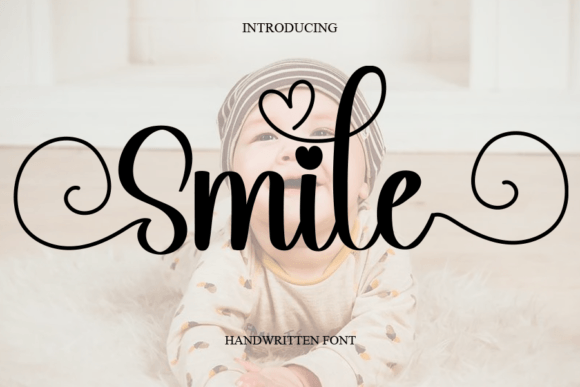
There’s something undeniably human about a handwritten note. It carries a warmth and personality that digital text often lacks. That’s the feeling the Smile font captures so effectively. It’s not a complex script font trying to mimic elaborate calligraphy, nor is it a rough, casual scrawl. Instead, Smile is a simple, clear, and approachable handwritten font that feels like a friendly note jotted down by a colleague or a loved one. Its letterforms are consistent and legible, with just enough natural variation in the strokes to avoid looking sterile. The overall personality is one of genuine friendliness and straightforward communication, making it a surprisingly versatile design asset.
Where This Creative Font Truly Shines
Understanding a font’s strengths is key to using it effectively. Smile isn’t a display font meant for large, dramatic headlines in a luxury magazine, nor is it a workhorse serif font for long-form body text. Its magic lies in specific applications where a personal, human touch is desired.
For brand identity and logo design, Smile can be perfect for businesses that want to project approachability and authenticity. Think of a local bakery, a yoga studio, a freelance consultant, or a children’s brand. Using Smile in the logo or on the website can immediately set a welcoming tone. It says, “We’re real people, and we’re here to help.”
In editorial design and publishing, it works beautifully for pull quotes, chapter headings in a lifestyle book, or titles on a blog post about personal stories. It breaks up the monotony of standard sans serif font or serif font headings and draws the reader in with a conversational feel. Similarly, in packaging design, especially for artisanal goods, cosmetics, or food products, Smile can add a homemade, trustworthy quality to labels and box text.
Digital applications are a natural fit. Social media graphics thrive on personality, and using Smile for Instagram quotes, Facebook announcements, or Pinterest pins can increase engagement by feeling more personal and less corporate. For web design, it’s ideal for short, impactful elements like a homepage tagline, a testimonial slider, or a call-to-action button that needs to feel friendly rather than demanding.
Making It Work: Practical Guidance for Using Smile
Choosing the right font is only half the battle; using it well is what separates good design from great. Here’s how to get the most out of this premium font.
Evaluate the Project Fit First. Before you even download, ask: does this project need a human, casual, or friendly tone? Smile would be a mismatch for a corporate law firm’s annual report but a perfect match for a non-profit’s community outreach campaign. It’s all about context.
Master the Art of Font Pairing. This is crucial. Because Smile has such a distinct personality, it needs a stable partner. Pair it with a clean, neutral sans serif font like Open Sans, Lato, or Montserrat for body text. This creates a clear visual hierarchy—the Smile font draws attention to key messages, while the sans serif ensures readability for longer passages. Avoid pairing it with another decorative or script font, which will create visual chaos.
Test Readability in Context. Always test your chosen font at the actual size and in the environment it will be used. Smile is highly legible for a handwritten font, but at very small sizes on a screen or in low-resolution print, some of its charm might be lost. Use it for headlines, subheads, and short sentences, not for fine print or lengthy paragraphs.
Review the Included Styles. A good commercial font often comes with more than one weight or style. Check if Smile includes variations like bold or italic. A bold version can be fantastic for emphasizing a single word within a headline, adding more dynamism to your layout.
Understand the Licensing. For any professional or commercial project—from a client’s website to products you sell—ensure you have the correct commercial license. This protects you legally and supports the font designer, allowing them to create more quality modern typography assets.
Ultimately, Smile is a tool for connection. It’s a creative font that can soften a corporate message, personalize a digital experience, or add authenticity to a physical product. Used thoughtfully, it doesn’t just display words; it conveys an emotion. In a world saturated with impersonal digital noise, that simple, natural feel might be exactly what your next project needs to stand out and be remembered.